The Oaxaca Institute officially ended on Friday night. It was a very busy week with our last round of classes, several meetings with my advisor (who finally made it to town), a baseball game, the start of Gueleguetza (a huge ceremony commemorating the indigenous communities of the state of Oaxaca) and protests picking up in the streets (see more below). I'll have more to say about my incredible "boot camp" experience once I've had a day or two to process things.
APPO protest in the Zocalo
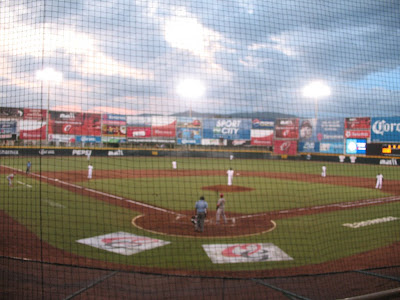
Pics from the baseball game - for those of you who keep up with the sport, Jose Offerman was playing for the Veracruz team
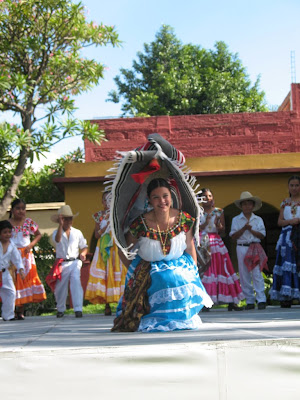
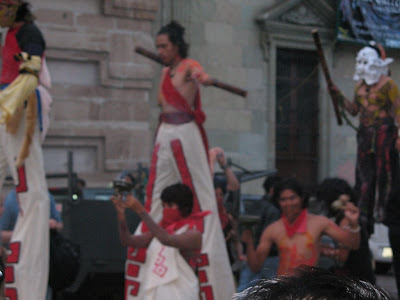
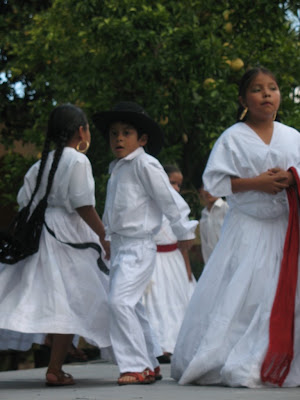
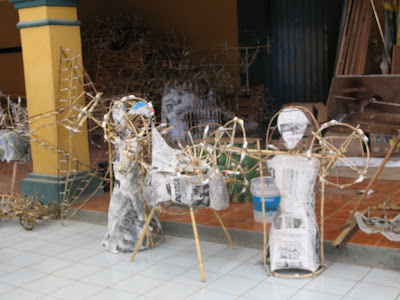
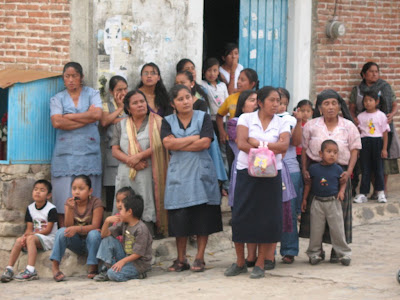
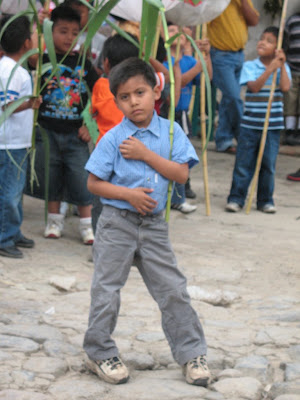
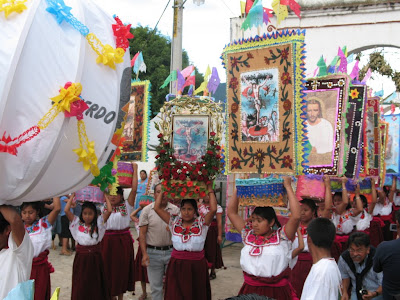
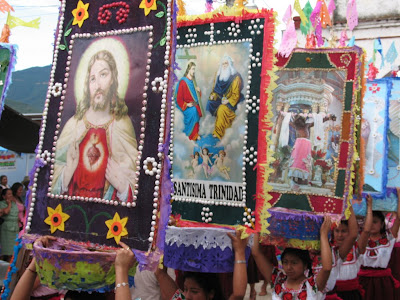
Shots from the mini-Gueleguetza
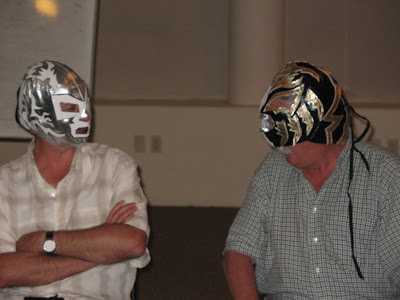
As a good-bye and thank you gift, our class bought Lucha Libre masks for our co-directors (notice that Beezley still has his bigote sticking out - on the right).
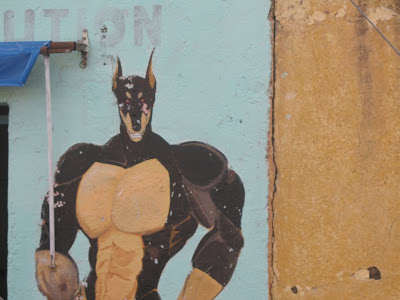
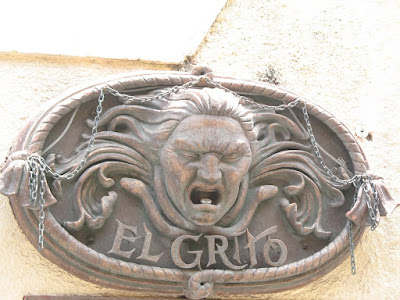
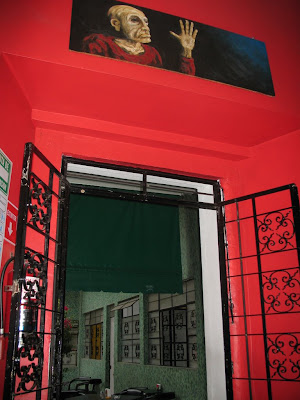
I walked past this gym every day and always giggled at this image of machismo
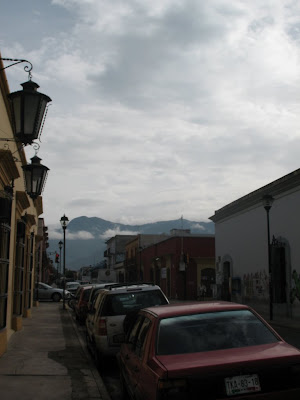
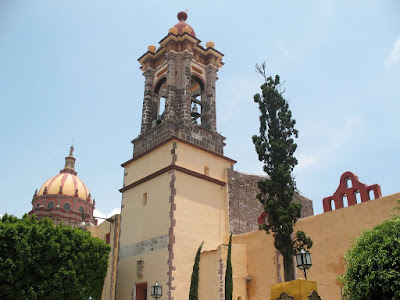
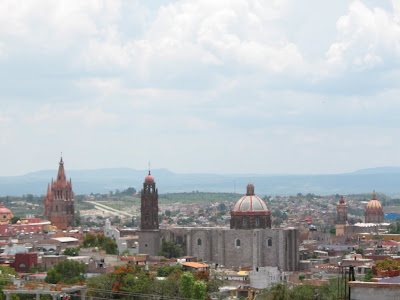
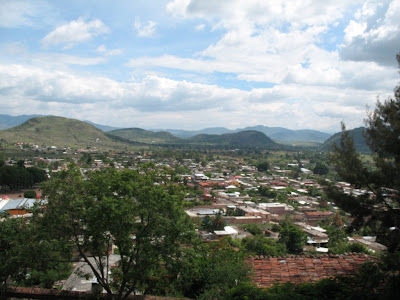
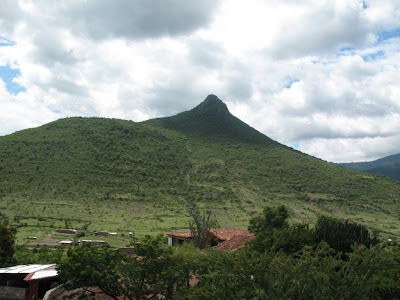
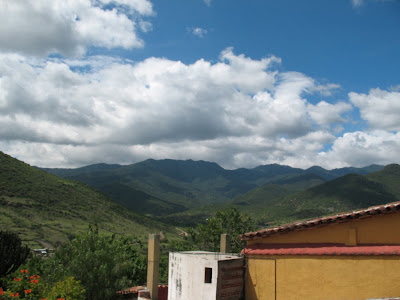
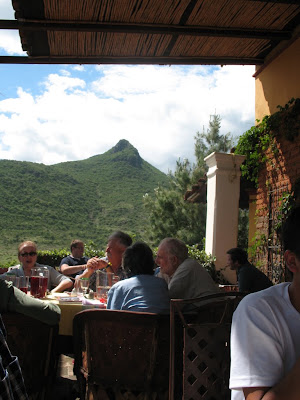
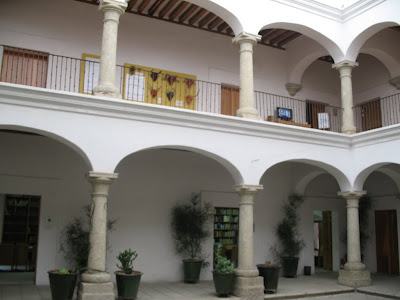
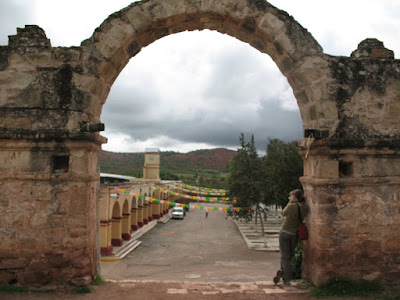
This was my view on the way to the Institute everyday
In the comments section of a previous post, my very good friend Amy H. asked me a series of questions about my experience in Oaxaca. Rather than just writing back to her, I thought I'd post my responses for any/all to see.
What's your favorite part of living in Mexico? What's your least (apart from being away from family and friends)?
The best thing about living in Mexico is having the "on the ground" opportunity to learn about the culture, history, society, and politics that help to define the nation. Rather than reading other peoples’ interpretations of Mexico’s past, present, and future, I’m getting the chance to witness it firsthand, to listen to the thoughts and sentiments of people who were raised here and have lived through good and bad conditions, and to be inspired by those who continue to pursue making this country more democratic, more liberalized, and more innovative.
My least favorite part of living here (apart from being away from family and friends) is the food selection. It’s not to say that it’s difficult to find yummy cuisine here (Mexican and non-Mexican). It’s more a matter of not being able to quickly grab a few ingredients and throw something together like I can at home. Everyone here seems to either take the time to make a truly delicious meal (i.e., all day) or orders food from restaurants/street vendors. The days of grabbing tofu, broccoli, noodles, and soy sauce – heating them all in a pan and calling it dinner – are long gone. The same is true for salads. Most of the vegetables you buy in the market have to be washed with a product called “Microdyne” to clean off any pesticides that might be on them. What this translates to is that you either have to plan ahead (one day) to make sure everything has been properly cleaned and is ready to eat, or ask each restaurant if they’ve washed their vegetables in purified water and trust them when they say “yes.”
What do you miss most? Again, not counting loved ones.
To be honest, there really isn't anything I miss other than my loved ones (and Trader Joe's).
What are the major differences between Mexican and American cultures? Similarities?
A few of the most noticeable differences between the cultures are:
1. Conservatism: What I mean by this is that most young adults (teenagers and those in their early twenties) usually live at home until they get married. To complicate things, parents generally do not approve of opposite sex visitors coming to the house for any reason – to study, to watch a movie, etc. Even in our group, we’ve been given warnings about girls visiting guys at their host family’s house (and vice versa). All of this leads to the unavoidable situation of encountering couples on the street, in the plazas and parks, and even in cars, making out to the point of being scandalous. They just don’t have anywhere to be alone, so all of the physical aspects of their relationships have to be carried out in public.
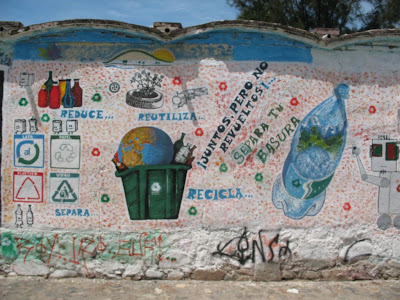
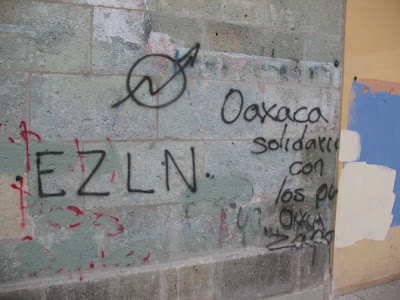
2. Censorship: This one is particularly a hot topic these days because it's time for Gueleguetza. As some of you may remember from reading the papers in 2006, Oaxacans led a large strike against the government in the weeks leading up to the festival. Riots and protests broke out, and the national army was sent in to break up the political opposition. Last year a smaller protest took place, and this year there are already signs that activists will be back in action. Graffiti against the conservative government and in support of the EZLN (Zapatistas) and APPO have begun to show up throughout the city. However, almost as quickly as the painters get their political messages on the walls, the state sends their own painters in to cover up the messages. Below are a few before and after shots I managed to snap:
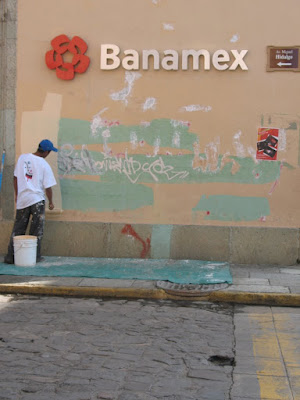
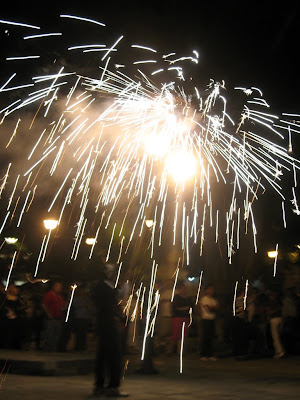
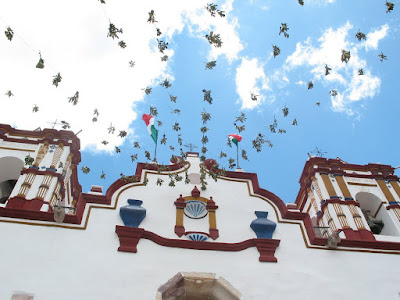
3. Entertainment: While many Mexican families have the same access to things as their American counterparts (TV, iPods, movies, sports), most of them prefer to spend their time doing smaller, less technologically-dependent activities together. Whether attending a traditional Patron Saint festival in the streets, playing soccer in the Zocalo, or tossing around giant tubular balloons after church, these seemingly simple activities bring family and friends together outdoors to share in the community experience. Americans just don’t seem to have many things that come close to equaling this. We tend to all stay in our individual houses, watch TV, and not participate in the building and maintenance of a community.
4. Slowness: I’m sure there is a nicer word for this, but one definite difference is the slower pace with which people seem to do things here. Nobody is in a hurry to get somewhere (on foot – in a taxi is an entirely different story), prepare the food you’ve ordered, or finalize the plans you’ve made. These things can actually be a good thing (when you’re not rushed to make it to class) and have sincerely helped to remind me the importance of taking things a little easier, casting aside my incessant need to plan and just go with the flow.
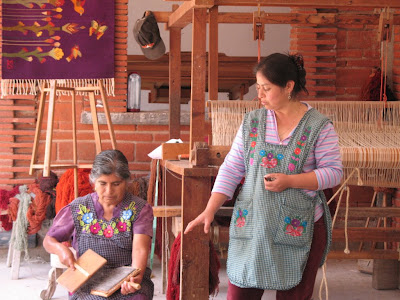
5. Vendors: Street vendors are everywhere here. Men ride bicycles around with giant bottles of purified water for sale. Trucks circle the neighborhood offering propane tanks ("Gas de Oaxaca"). Purses, shawls, rugs, crafts, blouses, toys, pottery, and countless other handmade items are available at every turn. Baskets of gum, cigarettes, candy, crackers, and mints are offered to you every 50 feet. If it starts to rain, three women will be standing in front of you selling ponchos within 30 seconds. If you're reading a book and pause to take a sip of your beer, along comes someone offering you a bookmark. Breakfast, lunch, dinner, and dessert carts line the sidewalks. Anything you could possibly imagine needing is never more than a few blocks away. Except coffee. For some reason, most of the coffee shops don't open until 10 AM and none of the carts carry it. I'll never understand that.
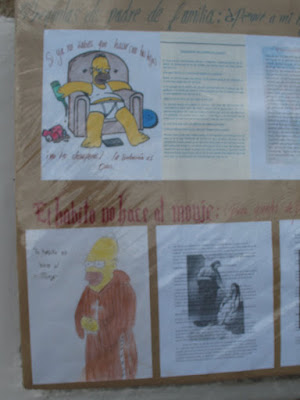
As far as similarities go, there are definitely signs of American culture everywhere you look. Whether it’s cartoon characters, fast food restaurants, movie stars, name brands, or a Justin Timberlake song, it’s impossible not to notice the ever-present US trademark. Would you ever consider living there permanently? Why or why not?
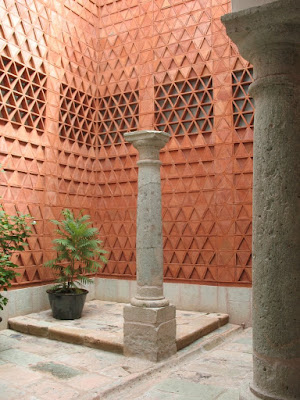
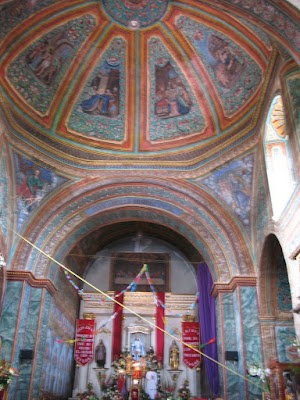
I would definitely consider living here permanently. Everyone I’ve met has been incredibly kind, hospitable, and patient with my developing language skills. They are happy to help you in any way they can and appreciate it when others want to know more about their culture, history, and language. I love being able to walk everywhere – no car, taxi, or even public transportation required – and finding amazing courtyards, plazas, outdoor cafes, and other public spaces to be. The art and architecture continue to take my breath away. The surrounding mountains, small towns, flora and fauna, and ancient ruins are inspirational. Not only does your money stretch farther (I think my most expensive meal here (and it was a special occasion) was $20 and included a multiple course meal and adult beverages), but your relationships with neighbors, vendors, and restaurant/bar owners also seem more lasting. The level of community participation in the Zocalo, the markets, the churches, and traditional rites and rituals far exceeds anything I’ve ever encountered. The pride people take in the things that they do, their family and friends, their homes and stores all encourage me to focus more on the positives that I’ve already got in my life and to worry less about those that I don’t. No place is perfect, and no place ever should be, but Mexico to me has become a place of peaceful contemplation, acceptance and inspiration – it would be amazing to live here permanently.
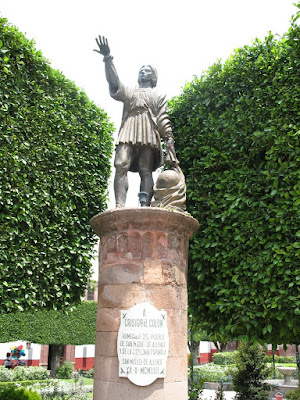
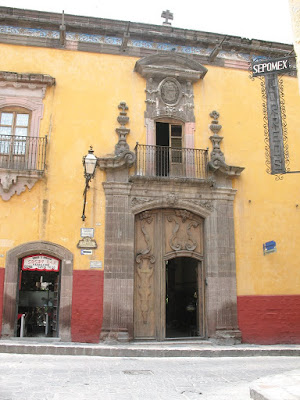
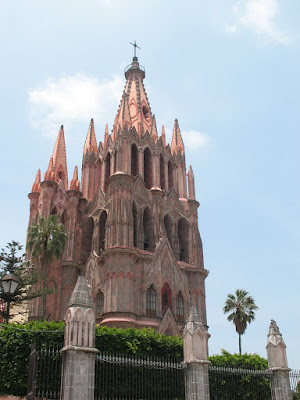
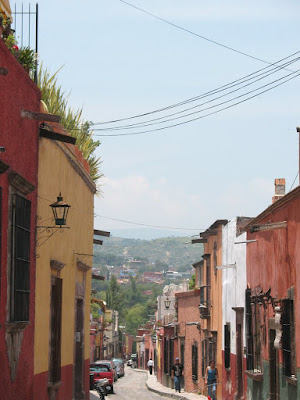
My mom and I are exploring Mexico City and San Miguel de Allende this week, and my fellow Oaxacan fellows are supposedly going to be sending around more "people" photos (I tend to take lots of landscape shots, as you can tell), so I'll have plenty more to post in the next few days.